
Logical Gates
Essential knowledge
Changed on:
19 June 2024
Overview
In workflow design different patterns can be achieved - one such pattern is known as Logical Gates. A Logical Gate is where the direction of the workflow execution depends on specific conditions being met, i.e. some kind of a logical condition that needs to be satisfied so that the workflow knows which branch to execute next.Key points
[Warning: empty required content area]Logical Gate Ruleset
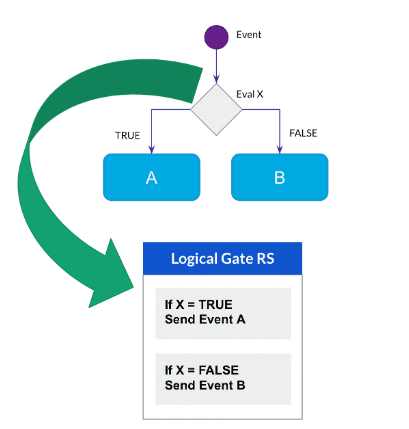
- Each Logical Gate involves a simple condition that evaluates to either TRUE or FALSE. This is represented by the diagram on the right.
- As seen in the diagram here:
- X is evaluated here, where X could be an Event Attribute, an Entity Field, etc.
- If X is found to be TRUE, then then X is sent to Branch A for further processing.
- Else, it is sent to Branch B for further processing.
A Logical Gate with multiple possible paths
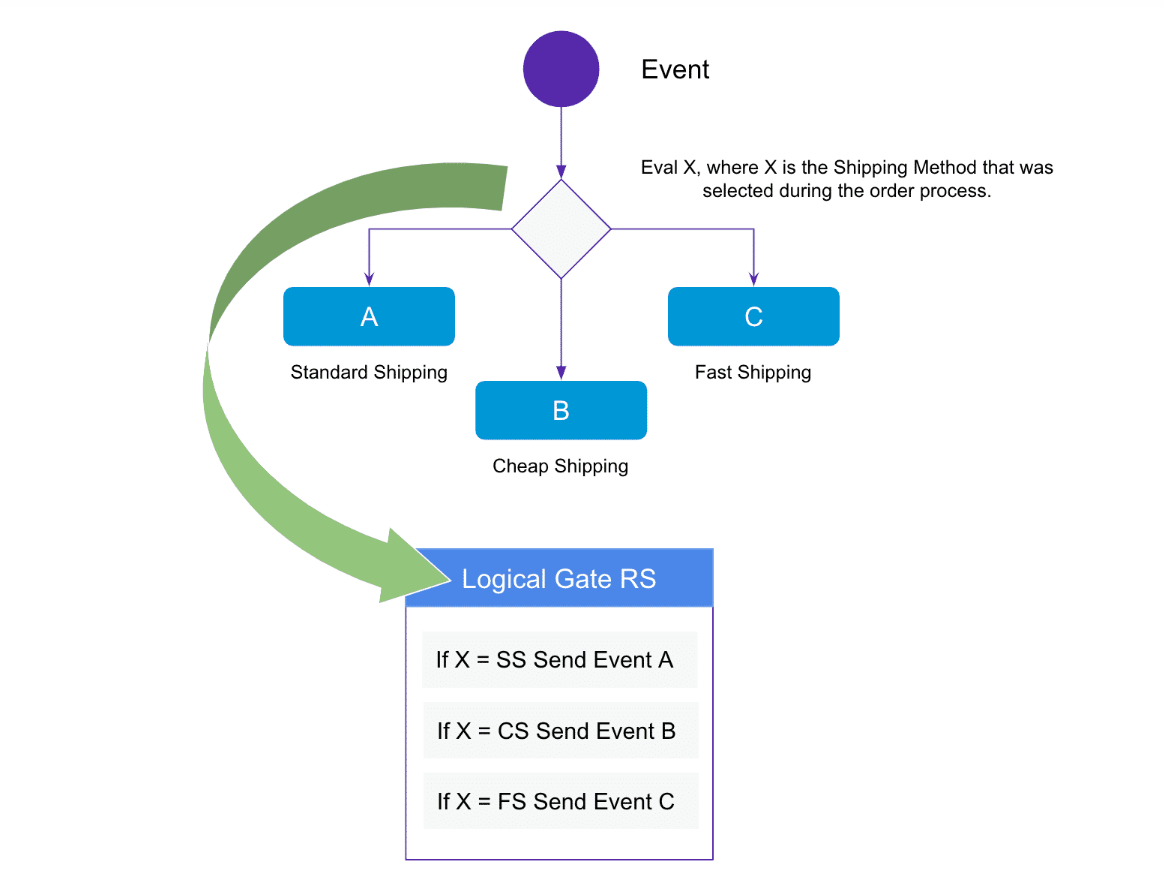
A Logical Gate may also have multiple possible paths, such as in the evaluation of an ENUM, but, a Logical Gate Ruleset only produces a single outcome, typically an inline event to process the next Ruleset. For example, evaluating X to select one of the three branches (A or B or C) to continue processing.Example: The evaluation of the shipping method that was selected during the order process.- Depending on what was selected, X will be sent to either branches A, B or C for further processing.
A Logical Gate Scenario
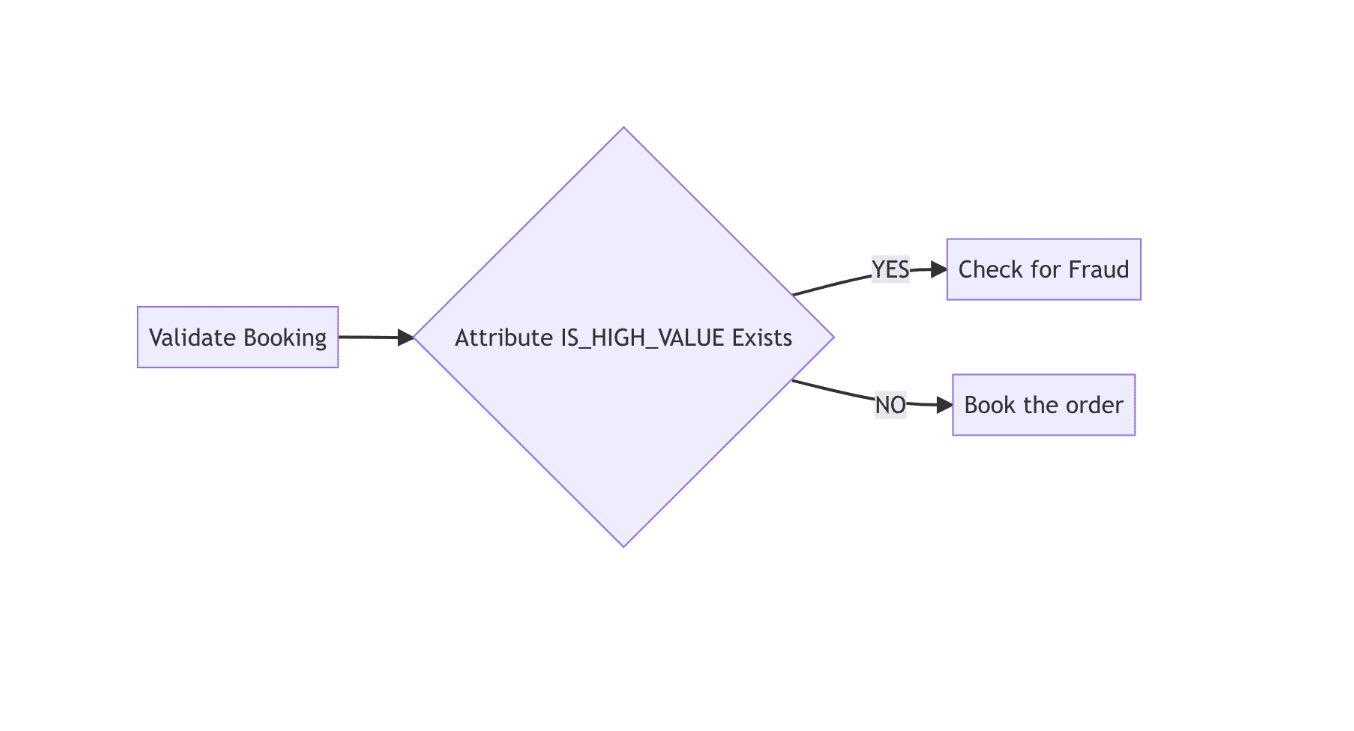 | For this scenario, let's assume that the client has a simple requirement:If the order is above $500 annotate it as High Value, and Check for Fraud, else Book the Order.As you can see here, only one of those conditions can ever resolve to TRUE at any given point in time, thereby providing only a single output path from this Ruleset at any time. |
- Logical Gates evaluate a simple condition by composition of rules
- Only 1 event (ever) output from the Ruleset
- Used for flow control, no other actions or outcomes should be present
