Docs
Authors:
Agnes Schliebitz-Ponthus, Cille Schliebitz, Randy Chan
Changed on:
5 Sept 2025
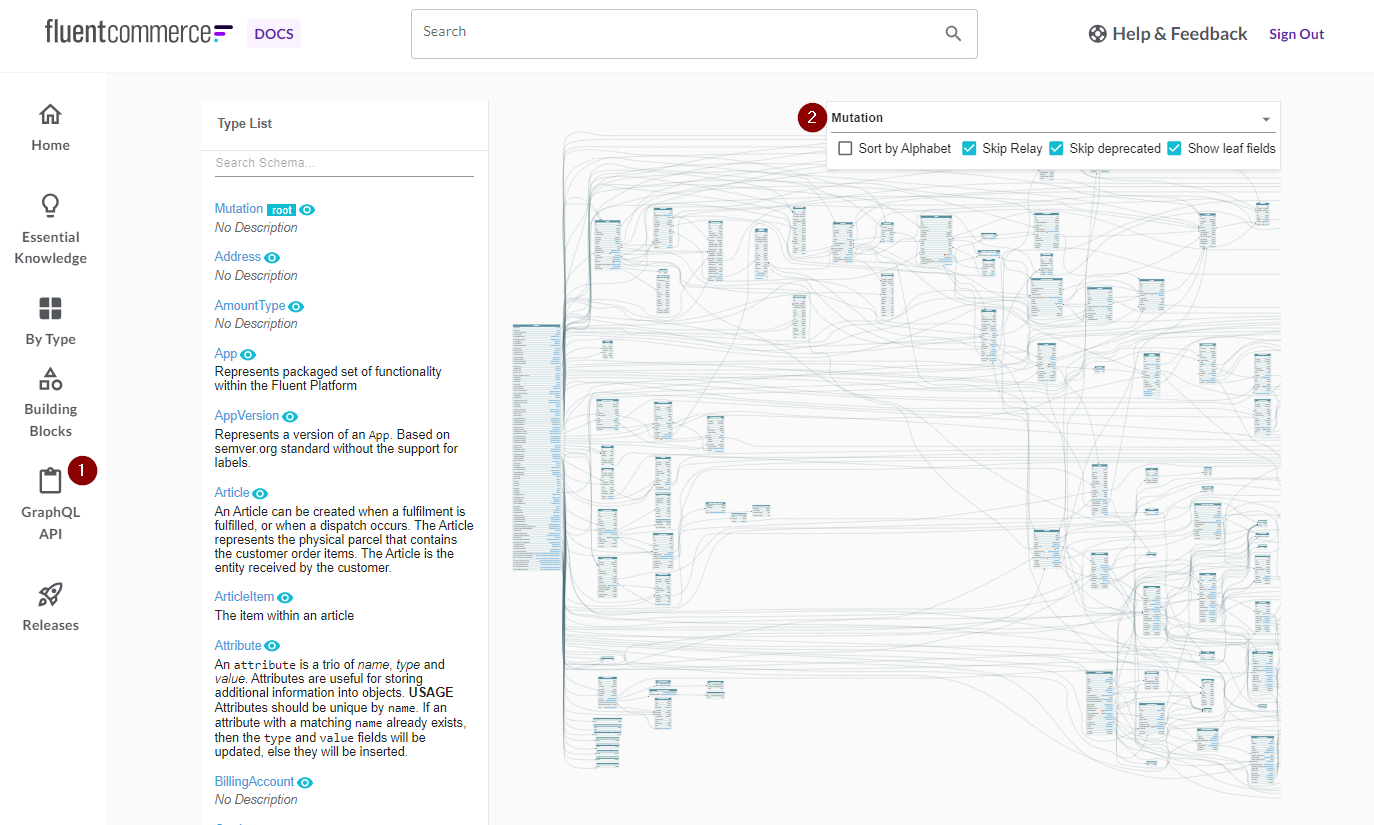
`order->type` declares the order type as HD or CC and can link to zero or more fulfilments by using `order->fulfilments`. Most transactional entities typically have a status field to represent their current state. (e.g. `BOOKED`, `CANCELLED`, `COMPLETE`)Most transactional entities have attribute fields available where users can use attributes to store specific values that can be used for the downstream workflow. `createOrder` mutation creates an Order entity, `updateOrder` mutation updates the existing order entity, and `orderByID` or `orders` queries retrieve the Order data.`removeNetworkFromLocation`, `removePermissionsFromRole`. More mutations can be found via the GraphQL API Explorer or the Reference Schema.`OrderCancel` ruleset getting orchestrated within the HD workflow.1[{
2 "name": "OrderCancel",
3 "description": "Cancels order",
4 "type": "ORDER",
5 "subtype": "HD",
6 "eventType": "NORMAL",
7 "rules": [
8 {
9 "name": "{ACCOUNTID}.core.SetState",
10 "props": {
11 "status": "CANCELLED"
12 }
13 },
14 {
15 "name": "{ACCOUNTID}.order.SendEventForAllFulfilments",
16 "props": {
17 "eventName": "CancelFulfilment"
18 }
19 }
20 ],
21 "triggers": [
22 {
23 "status": "CREATED"
24 },
25 {
26 "status": "RECEIVED"
27 },
28 {
29 "status": "BOOKED"
30 }
31 ],
32 "userActions": [
33 {
34 "context": [
35 {
36 "label": "CANCEL ORDER",
37 "type": "PRIMARY",
38 "modules": [
39 "adminconsole"
40 ],
41 "confirm": true
42 }
43 ],
44 "attributes": []
45 }
46 ]
47},
48{
49 "name": "CancelFulfilment",
50 "description": "Cancels all the fulfilments when the order is cancelled,sends an event to inventory catalog to reset any reserved inventory against the fulfilment",
51 "type": "FULFILMENT",
52 "eventType": "NORMAL",
53 "rules": [
54 {
55 "name": "{ACCOUNTID}.order.CancelFulfilment",
56 "props": null
57 },
58 {
59 "name": "{ACCOUNTID}.order.SendEventToUpdateInventoryQuantity",
60 "props": {
61 "eventName": "UpdateInventoryQty",
62 "operation": "UNRESERVE",
63 "retailerId": "5000299",
64 "inventoryCatalogueRef": "DEFAULT:5000299"
65 }
66 }
67 ],
68 "triggers": [
69 {
70 "status": "CREATED"
71 },
72 {
73 "status": "PROCESSING"
74 },
75 {
76 "status": "AWAITING_WAVE"
77 }
78 ],
79 "userActions": []
80}
81]`OrderCancel` ruleset:1POST: {{fluentApiHost}}/api/v4.1/event/async
2
3{
4 "name": "OrderCancel",
5 "accountId": "{ACCOUNTID}",
6 "retailerId": "5000299",
7 "rootEntityRef": "HD_789535507",
8 "rootEntityType": "ORDER",
9 "entityRef": "HD_789535507",
10 "entityType": "ORDER",
11 "attributes": {
12 "CANCEL_REASON": "CREDIT FAILED"
13 }
14}
15
16
17`OrderCancel` ruleset. The `OrderCancel` ruleset executes two rules to set the order status to CANCELLED and send an event to the `CancelFulfilment` ruleset for every fulfillment. The `CancelFulfilment` ruleset cancels the fulfillment and un-reserves the quantities. Hence, orchestrate entities update via EVENT API call is much more efficient than by calling GQL `updateOrder` mutation`fulfilment` entity is only involved in payment processing at the invoicing stage as the 'Ready to Ship' status is directly linked to the `fulfilment` entity.  See the video below on how to look for statuses within a workflow, you can learn more about entities and their available statuses in the Fulfilment and Order reference modules.

Copyright © 2024-2026 Fluent Retail Pty Ltd (trading as Fluent Commerce). Unless otherwise expressly stated in a current written agreement with Fluent Commerce or any of its affiliates or on any single page of the docs.fluentcommerce.com site, use of the materials on this site is strictly limited to viewing by individuals over 18 years old for legitimate commercially appropriate reasons; and any downloading, copying or other actions or uses of any kind or by any means of the materials on this site, including by artificial intelligence tools, is strictly prohibited. All other rights reserved.